
The Definitive 2025 Guide to Understanding Romantic Body Language
Table of Contents
- Introduction: What Romantic Body Language Is and Why It Matters
- How Attraction Shows Up Physically: An Overview
- Eyes and Gaze: Contact, Dilation, and Timing
- Facial Signals: Smiles, Micro-expressions, and Authenticity
- Posture and Orientation: Leaning, Mirroring, and Openness
- Touch and Proxemics: Consent, Escalation, and Cultural Cues
- Vocal Cues and Pauses: Tone, Tempo, and Laughter
- Clusters of Cues: Reading Combinations Not Single Signs
- Context Matters: Environment, Mood, and Cultural Differences
- Practical Micro-Skills: Observation Drills and Journaling Prompts
- Ethics and Consent: Respectful Interpretation and Boundaries
- Case Studies: Short Scenarios and What to Notice
- Quick Reference: Checklist for Spotting Genuine Interest
- Further Reading and Study References
- Conclusion: Applying Skills with Empathy
Introduction: What Romantic Body Language Is and Why It Matters
Have you ever been on a date, trying to decipher the silent conversation happening across the table? We spend so much time crafting the perfect message or planning what to say, but communication is overwhelmingly nonverbal. This is where understanding romantic body language becomes an essential skill. It’s the art of interpreting the unspoken signals, gestures, and postures that reveal attraction, interest, and emotional connection. These cues often broadcast our feelings more honestly than our words do.
Why does it matter? In the complex world of dating and relationships, being able to read these signals can foster deeper empathy, prevent miscommunication, and build genuine rapport. It’s not about becoming a mind reader, but about becoming a more attentive and perceptive partner. This guide blends insights from behavioral psychology with practical exercises to help you develop the skill of understanding romantic body language ethically and effectively, paving the way for more meaningful connections.
How Attraction Shows Up Physically: An Overview
When we feel attracted to someone, our bodies undergo a series of physiological changes driven by our autonomic nervous system. This is the same system that controls our fight-or-flight response. The heart rate may quicken, palms might get a little sweaty, and we get a rush of adrenaline. These internal shifts produce external cues that can signal interest.
These signs can include a subtle blush, slightly parted lips, or an increased energy level. It’s crucial to remember that the key to understanding romantic body language lies in observing patterns, or “clusters” of these signals, rather than fixating on a single, isolated gesture. A single crossed arm could mean discomfort, or it could just mean the person is cold. But crossed arms combined with a lack of eye contact and a turned-away torso tell a much clearer story.
Eyes and Gaze: Contact, Dilation, and Timing
The eyes are often called the windows to the soul for a reason; they are incredibly expressive and central to romantic communication.
The ‘Look and Look Away’
One of the classic signs of initial interest is the brief, almost shy, eye contact. Someone might meet your gaze for a second, look down or away, and then look back. This “coy” glance can be a low-risk way of signaling interest and inviting a response without being overly forward.
Pupil Dilation
When we are interested in or aroused by someone or something, our pupils often dilate (get larger). This is an involuntary response controlled by the nervous system. While lighting conditions are the primary factor, if you’re in a consistently lit room and notice someone’s pupils seem larger when they look at you, it can be a strong subconscious indicator of attraction.
The Lingering Gaze
As comfort and interest grow, eye contact tends to become longer and more sustained. A gaze that lasts for more than a few seconds, especially when paired with a soft smile, communicates intimacy and focus. This type of gaze says, “I am fully present with you and I am interested in what you have to say.” This is a fundamental piece of understanding romantic body language in real time.
Facial Signals: Smiles, Micro-expressions, and Authenticity
Our faces are a canvas for our emotions, and learning to read them accurately is a superpower in dating.
The Duchenne Smile
Not all smiles are created equal. A polite, social smile involves only the muscles around the mouth. A genuine smile of happiness, known as a Duchenne smile, involves both the mouth and the muscles around the eyes, creating “crow’s feet.” When someone gives you a Duchenne smile, their whole face lights up, signaling authentic positive emotion.
Micro-expressions
These are fleeting facial expressions that last for only a fraction of a second and reveal a person’s true feelings. For instance, a quick flash of a frown before smiling could indicate momentary doubt or displeasure. While difficult to spot, becoming more aware of them can offer deeper insight. Research into emotion and expression studies shows how powerful these subtle cues are.
Lip Biting and Licking
Subtly biting, touching, or licking the lips can be a self-soothing gesture or a sign of heightened sensory awareness often associated with attraction. It draws attention to the mouth and can be an unconscious signal of romantic or physical interest.
Posture and Orientation: Leaning, Mirroring, and Openness
How a person holds and orients their body can tell you volumes about their level of engagement and comfort.
Leaning In: The Proximity Principle
When we are engaged and interested in someone, we unconsciously want to close the physical distance between us. Leaning in while someone is talking shows you are paying attention and are captivated by the conversation. Conversely, leaning back or away can signal disinterest or discomfort.
Mirroring: Unconscious Rapport-Building
Mirroring is the subconscious imitation of another person’s gestures, posture, or speech patterns. If you take a sip of your drink and they do the same, or if you lean on your elbow and they follow suit, it’s often a sign that they feel a connection and are trying to build rapport. It’s the body’s way of saying, “I am like you; we are in sync.”
Open vs. Closed Postures
An open posture involves keeping the torso and front of the body facing the other person, with arms and legs uncrossed. This signals approachability, confidence, and receptiveness. A closed posture—arms crossed, body angled away, holding an object like a bag in front of the chest—can create a barrier and may indicate defensiveness, nervousness, or a lack of interest.
Touch and Proxemics: Consent, Escalation, and Cultural Cues
Physical touch and the use of personal space are powerful elements in the vocabulary of romantic interest.
Proxemics: The Space Between Us
Proxemics is the study of how people use space. The comfortable distance people keep between themselves is their personal bubble. When someone is attracted to you, they may find reasons to enter your personal space, such as standing a little closer than necessary in a group or sitting next to you when other options are available. This is a subtle yet significant part of understanding romantic body language.
The Role of ‘Accidental’ Touches
Early on, touch is often subtle and presented as accidental. A light, brief touch on the arm while laughing at a joke, a hand on the back to guide you through a doorway, or knees brushing under a table are common ways to test the waters. The reaction to these small touches is very telling.
Escalation and Consent
It is absolutely critical to remember that touch must be consensual. Paying attention to how someone responds to a touch is paramount. Do they pull away, or do they lean into it? Do they reciprocate? Always prioritize clear, verbal consent as intimacy progresses. Body language can suggest interest, but it can never replace an enthusiastic “yes.”
Vocal Cues and Pauses: Tone, Tempo, and Laughter
The sound of someone’s voice can be as revealing as their physical gestures.
Vocal Pitch and Tone
When attracted to someone, people’s vocal tones often change. Men might adopt a slightly lower, softer pitch, while women might use a higher, more varied tone. A warm, gentle tone of voice, regardless of pitch, generally indicates comfort and affection.
Speech Tempo and Pauses
Speaking slightly faster than usual can indicate excitement or nervousness. On the other hand, comfortable pauses and a relaxed tempo can signal intimacy and a lack of pressure. Genuine, shared laughter is one of the strongest signs of connection, indicating that you are both on the same wavelength.
Clusters of Cues: Reading Combinations Not Single Signs
The golden rule of understanding romantic body language is to never rely on a single cue. Instead, look for clusters of cues that tell a consistent story. A single action can be easily misinterpreted. For example:
- A single cue: They touch their hair. (Could be a habit, or they’re nervous).
- A cluster of cues: They touch their hair while making direct eye contact, smiling a Duchenne smile, and leaning toward you.
The second scenario paints a much more reliable picture of romantic interest. Always look for at least three or four concurrent signals pointing in the same direction before forming a hypothesis about someone’s feelings.
Context Matters: Environment, Mood, and Cultural Differences
Body language is not a universal language; its meaning is heavily dependent on context.
The Environment’s Influence
A loud, crowded bar will elicit different body language than a quiet, intimate dinner. Someone might stand closer simply to be heard, or cross their arms because the room is chilly. Always assess the environment before interpreting gestures.
Individual Mood and Personality
An introverted person may show interest more subtly than an extrovert. Someone having a bad day may seem distant, even if they are interested. Consider a person’s baseline behavior and personality. Furthermore, individual relationship patterns are often shaped by early life experiences, as detailed in attachment theory.
Cultural Nuances
Norms around personal space, eye contact, and touch vary dramatically across cultures. What is considered a friendly gesture in one culture might be seen as overly forward in another. Be mindful and respectful of cultural differences when interpreting signals.
Practical Micro-Skills: Observation Drills and Journaling Prompts
Developing your skills in understanding romantic body language requires practice. Here are some strategies you can use starting in 2025 to sharpen your observation.
The 5-Minute Observation Drill
When you’re in a public place like a coffee shop, take five minutes to discreetly observe a couple interacting. Don’t listen to their words. Just watch their nonverbals. Notice their posture, eye contact, and gestures. Are they mirroring each other? Is their posture open or closed? This trains your brain to notice these details in real time.
Journaling for Clarity
After a date or social interaction, take a few minutes to journal about the nonverbal cues you noticed. Ask yourself:
- What three specific body language signals did I observe in them?
- What three signals did I notice in myself?
- Did their words and their body language align?
- How did their nonverbal cues make me feel?
Ethics and Consent: Respectful Interpretation and Boundaries
This knowledge comes with responsibility. Understanding romantic body language is a tool for connection, not manipulation. It’s about forming an educated guess about someone’s feelings, which should then be confirmed with direct, respectful communication. Never assume you know what someone is thinking or feeling. Use your observations to guide your own actions—to decide if it feels right to continue the conversation or express your own interest—but never to make assumptions about consent. Consent must always be clear, verbal, and enthusiastic.
Case Studies: Short Scenarios and What to Notice
Scenario 1: The Coffee Date
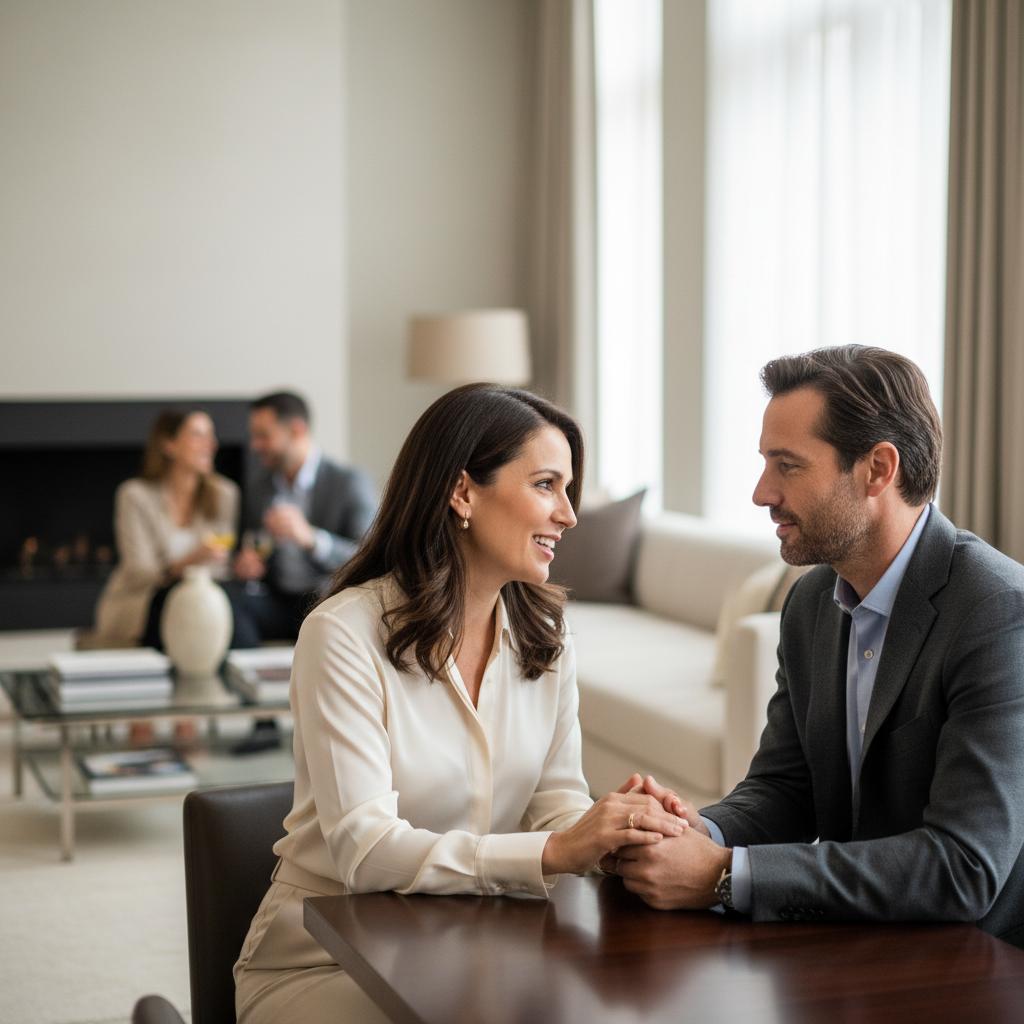
Alex and Jamie are on a first date. Jamie is leaning forward, with their hands resting on the table, palms up. They maintain consistent eye contact and laugh, showing a full Duchenne smile. When Alex speaks, Jamie nods and mirrors Alex’s posture. What to notice: The cluster of cues—leaning in, open posture, mirroring, genuine smiles, and steady eye contact—strongly suggests genuine interest and engagement.
Scenario 2: The Group Hangout
Casey is at a party and talking to Sam. Sam is laughing at Casey’s jokes and occasionally makes eye contact, but Sam’s feet and torso are angled toward another group of friends. Their arms are crossed. What to notice: This is a mixed signal. The laughter is positive, but the body orientation (pointing away) suggests their attention is divided or they are ready to leave the conversation. The crossed arms could be a sign of being closed off or simply a comfortable stance. This ambiguity means more information is needed before making any conclusions.
Quick Reference: Checklist for Spotting Genuine Interest
| Signal Category | Potential Signs of Interest | Potential Signs of Disinterest |
|---|---|---|
| Eyes | Sustained eye contact, pupil dilation, “look and look away” | Avoiding eye contact, darting eyes, a glazed-over look |
| Face | Genuine (Duchenne) smiles, raised eyebrows, lip biting | Tight-lipped or forced smiles, frowning, jaw tension |
| Posture | Leaning in, open body, mirroring, facing you directly | Leaning away, crossed arms/legs, angled body, creating barriers |
| Touch | Light, “accidental” touches on arm/back, leaning in close | Pulling away from touch, flinching, maintaining distance |
| Voice | Warm tone, varied pitch, genuine laughter | Monotone voice, abrupt responses, forced laughter |
Further Reading and Study References
For those interested in the science behind these observations, the following resources offer a wealth of information from peer-reviewed studies and psychological organizations:
- Society for Personality and Social Psychology (SPSP): A great resource for the latest findings in social interaction. Visit them at SPSP.org.
- Nonverbal Communication Research: For deep dives into scientific papers, the PubMed database is an invaluable portal for nonverbal communication research.
Conclusion: Applying Skills with Empathy
Mastering the art of understanding romantic body language is a journey, not a destination. It’s a skill that enhances your emotional intelligence and helps you navigate the dating world with more confidence and insight. Remember to always look for clusters of cues, consider the context, and prioritize respect and consent above all else. By approaching nonverbal communication with curiosity and empathy, you’re not just looking for signs of attraction; you’re building a foundation for a more profound and authentic connection with others.