
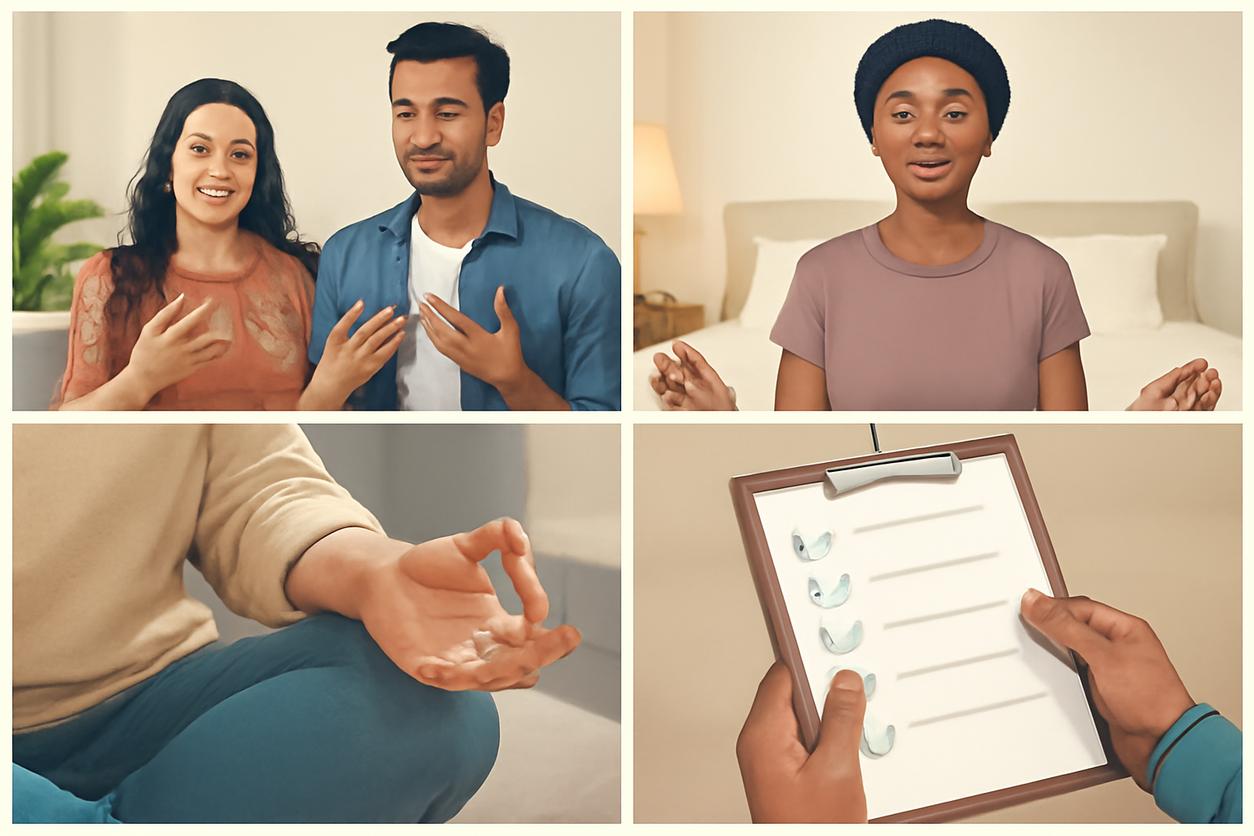
Strategies for Overcoming Dating Anxiety: Your Practical 2025 Guide
Dating can feel like a high-stakes performance, and it’s completely normal for your heart to race or your palms to sweat before meeting someone new. For many, this nervousness can escalate into full-blown dating anxiety, turning what should be an exciting opportunity into a source of dread. If the thought of a date sends your mind into a spiral of “what ifs,” you are not alone. This guide provides practical, evidence-informed strategies for overcoming dating anxiety, designed for busy professionals who want to build confidence and form meaningful connections. We will blend insights from behavioral psychology with micro-practices you can use right away—before, during, and after your dates.
Table of Contents
- Reframing nervousness as useful information
- Quick pre-date reset routine (10 minutes)
- Tools to use during a date without disrupting flow
- Cognitive strategies to reduce catastrophic thinking
- Building long-term resilience
- When to seek additional support
- Sample scripts and role-play prompts
- Quick resources and further reading
Reframing nervousness as useful information
The first step in managing dating anxiety is to change your relationship with it. Instead of viewing nervousness as a sign that something is wrong, try seeing it as valuable information. That fluttery feeling is your body’s sympathetic nervous system kicking in—the same system that manages your “fight or flight” response. In a dating context, it’s not signaling mortal danger; it’s signaling that you care about the outcome. This event is important to you!
Think of it as anticipatory energy rather than anxiety. Those butterflies are a sign that you’re invested, hopeful, and stepping out of your comfort zone, which is a prerequisite for growth and connection. By simply relabeling the sensation from “I’m so anxious” to “I’m really excited to see how this goes,” you can shift your entire emotional state. Acknowledging the feeling without judgment (“Okay, my heart is beating fast because I’m meeting someone new, and that makes sense”) takes away its power and allows you to move forward with more calm and control.
Quick pre-date reset routine (10 minutes)
Before you even leave the house, you can significantly lower your anxiety levels with a brief, intentional routine. Don’t just rush from work to the date. Carve out ten minutes to ground yourself. This small investment is one of the most effective strategies for overcoming dating anxiety before it takes hold.
Breathing and grounding micro-practices
When you feel anxious, your breathing becomes shallow and rapid. Consciously slowing it down sends a powerful signal to your brain that you are safe. For more information on the science behind this, see this research on breathing and vagal tone.
- Box Breathing: This is a simple and potent technique. Inhale slowly for a count of four, hold your breath for a count of four, exhale completely for a count of four, and hold the exhale for a count of four. Repeat 5-10 times.
- The 5-4-3-2-1 Method: This grounding exercise pulls you out of your anxious thoughts and into the present moment by engaging your senses. Look around and name:
- 5 things you can see.
- 4 things you can physically feel (the chair beneath you, your watch on your wrist).
- 3 things you can hear.
- 2 things you can smell.
- 1 thing you can taste.
Mental rehearsal and brief exposure tips
Your brain often has trouble distinguishing between vivid imagination and reality. Use this to your advantage.
- Positive Visualization: Spend a few minutes imagining the date going well. Don’t focus on a perfect, fairytale outcome. Instead, visualize yourself feeling calm, curious, and engaged. Picture yourself smiling, asking a question with ease, and enjoying the conversation. This primes your brain for a positive experience.
- Brief Exposure: Five minutes before you start your reset routine, look at your date’s picture or profile. Allow the anxious feelings to arise without fighting them. Notice them, breathe through them, and then proceed with your grounding exercises. This acts as a mini-dose of exposure therapy, helping to desensitize your nervous system to the trigger.
Tools to use during a date without disrupting flow
One of the biggest fears is that anxiety will strike mid-conversation. Having a few discreet tools at your disposal can make you feel more prepared and in control. These are subtle dating anxiety strategies you can deploy without your date ever knowing.
Subtle body language adjustments
Your posture influences your mindset. Adopting a more open, confident posture can actually make you feel more confident.
- Ground Yourself: Discreetly press both of your feet flat onto the floor. Feel the solid ground beneath you. This simple physical act can be incredibly grounding when your thoughts are racing.
- Open Up: Uncross your arms and legs. Try to rest your hands gently on the table or in your lap. An open posture signals to your own brain, as well as your date, that you are relaxed and receptive.
- Lean In (Slightly): When your date is speaking, leaning in just a small amount shows engagement and can help shift your focus from your internal anxiety to their words.
Short phrases to steady conversation when anxiety spikes
If you feel your mind go blank, don’t panic. Have a few simple phrases ready to give yourself a moment to reset.
- The Deflector: “That’s a really interesting question. What are your thoughts on it?” This buys you time and shows you value their opinion.
- The Clarifier: “Tell me more about that.” This keeps the conversation flowing and puts the focus back on them, giving you a chance to breathe and listen.
- The Pause: “Hmm, let me think about that for a second.” It’s perfectly acceptable to take a moment to gather your thoughts. It makes you seem thoughtful, not anxious.
Cognitive strategies to reduce catastrophic thinking
Dating anxiety is often fueled by cognitive distortions—unhelpful thought patterns that predict the worst-case scenario. Learning to challenge these thoughts is a cornerstone of Cognitive Behavioral Therapy (CBT) and a powerful strategy for overcoming dating anxiety.
Simple thought-record technique
Before a date, if you’re catastrophizing, grab a piece of paper and quickly jot down the following. This exercise externalizes the fear and makes it manageable.
| Anxious Thought | Evidence Against This Thought | A More Balanced Thought |
|---|---|---|
| “I’m going to run out of things to say and it will be awkward.” | “I’ve had long conversations with friends before. I can ask questions. Silence is not always a catastrophe.” | “I might have moments of quiet, and that’s okay. I can focus on being curious and asking questions to keep the conversation going.” |
| “They are going to think I’m boring and unattractive.” | “They swiped right and agreed to meet me, so there must be some initial interest. My friends find me interesting.” | “I don’t know what they will think, and that’s out of my control. My goal is to be my authentic self and see if we connect.” |
Reattribution and curiosity prompts
When you notice your date’s behavior, your anxious mind might jump to the most negative conclusion. Practice reattribution by generating alternative explanations.
- Instead of: “They checked their phone. They must be bored with me.”
- Try: “Maybe they are on call for work, or checking on a family member. Or maybe it’s just a habit.”
Shift your mindset from performance to curiosity. Your goal is not to impress your date; it’s to determine if you are compatible. Ask yourself questions like:
- “What is one interesting thing I can learn about this person?”
- “Am I enjoying this person’s company?”
- “What does this conversation tell me about their values?”
Building long-term resilience
Truly effective strategies for overcoming dating anxiety involve building new habits and gradually expanding your comfort zone over time, not just managing panic in the moment.
Small challenges to expand comfort zones
Practice low-stakes social interactions in your daily life to build confidence. The goal is to get used to the feeling of mild social risk.
- Give a genuine compliment to the barista at your coffee shop.
- Ask the cashier at the grocery store how their day is going and listen to the answer.
- Make brief, friendly eye contact and smile at a stranger you pass on the street.
Tracking progress without pressure
Focus on your effort, not the outcomes. A “successful” date is one you showed up for, regardless of whether you get a second one. Keep a small journal and note your wins:
- “I felt nervous today but I used the box breathing technique and it helped.”
- “I went on the date even though I wanted to cancel.”
- “I managed to ask three open-ended questions.”
Celebrating these small behavioral wins builds momentum and reinforces that you are capable of handling discomfort.
When to seek additional support
While these self-help strategies can be incredibly effective, sometimes dating anxiety is part of a larger pattern that benefits from professional guidance. Consider seeking support from a therapist or counselor if:
- Your anxiety feels debilitating and consistently prevents you from going on dates.
- You experience panic attacks before or during dates.
- Your fear of rejection is impacting your self-esteem and other areas of your life.
A mental health professional can provide tailored tools and help you explore deeper issues that may be contributing to your anxiety, such as past relationship trauma or attachment patterns. Understanding your style of relating to others through frameworks like Attachment Theory can be particularly illuminating.
Sample scripts and role-play prompts
Having a few lines prepared can feel like a safety net. Practice saying them out loud so they feel natural.
- To start the conversation: “So your profile mentioned you love hiking. Have you discovered any great trails around here recently?”
- When you feel a lull: “I’m curious, what’s been the best part of your week so far?”
- To share something about yourself: “That reminds me of a project I’m working on at my job. I’m really enjoying it because…”
- To end the date positively: “Thank you for tonight, I had a really nice time getting to know you.”
Quick resources and further reading
Continuing your learning is a great way to feel empowered. Here are a few resources to deepen your understanding of the concepts discussed in this guide:
- Mindfulness Practice Guide: Learning to be present is a core skill for managing anxiety. This guide from Mindful.org offers simple ways to start a mindfulness practice.
- Cognitive Behavioral Therapy (CBT) Overview: Understand the model behind challenging your anxious thoughts with this overview from the National Institute of Mental Health.
- Attachment Theory Summary: Explore how your early bonds can influence your romantic relationships via this summary from the American Psychological Association.
Ultimately, implementing these strategies for overcoming dating anxiety is a practice. Be patient and compassionate with yourself. Every date is an opportunity to learn, practice, and grow—not a test you have to pass. By focusing on presence over perfection, you can transform dating from a source of anxiety into an adventure of connection.