
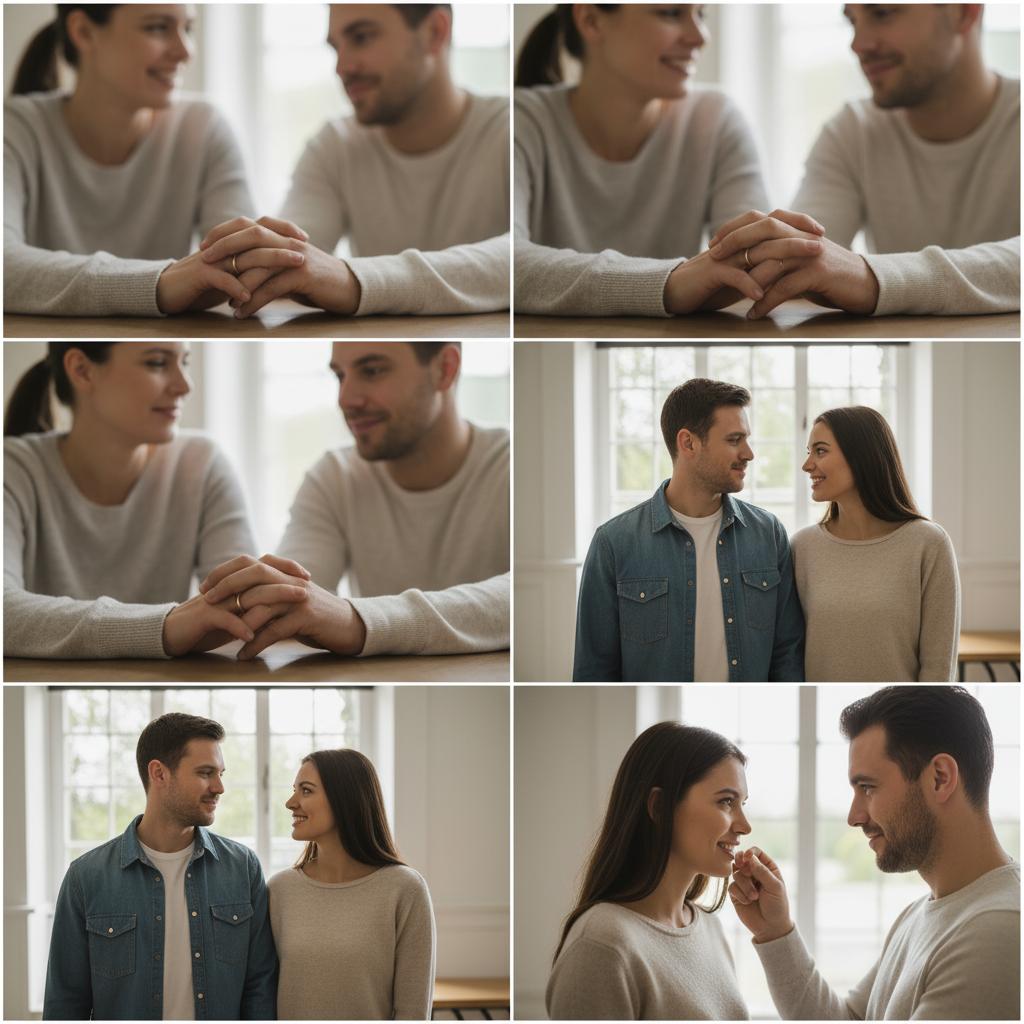
The Silent Language of Love: A Practical Guide to Understanding Non-Verbal Signals in Relationships
Table of Contents
- Introduction: Why Silent Signals Matter in Love
- How Non-Verbal Cues Shape Closeness and Trust
- Core Non-Verbal Signals Explained
- Voice and Rhythm: What Tone and Pacing Reveal
- Touch and Timing: The Importance of Consent and Calibration
- Context is Everything: Culture, Mood, and Setting
- Common Misreads and How to Avoid Assumptions
- Short Daily Exercises to Sharpen Your Observation Skills
- Conversation Starters to Test Non-Verbal Feedback
- Reflective Prompts for You and Your Partner
- When Patterns Suggest Deeper Issues
- Putting It Into Practice: Routine Habits for Connection in 2026 and Beyond
- Further Reading and Trusted Research
- Summary and Mindful Next Steps
Introduction: Why Silent Signals Matter in Love
We spend so much time choosing the right words to say to our partners, but what about the conversations we have without speaking at all? Research consistently shows that the vast majority of communication is non-verbal. The subtle shift in posture, the fleeting glance, the gentle touch on the arm—these are the silent signals that build, maintain, or sometimes erode intimacy. A deep and rewarding partnership often hinges on the ability to interpret this unspoken language. This guide is dedicated to the art and science of understanding non-verbal signals in relationships, offering practical tools to help you listen with your eyes and connect on a more profound level.
How Non-Verbal Cues Shape Closeness and Trust
At its core, trust is built on a sense of safety and predictability. When a partner’s words align with their body language, we feel a sense of congruence. This consistency is reassuring to our nervous system. For example, if your partner says “I’m listening” while turning their body toward you, making eye contact, and nodding, you believe them. If they say the same words while scrolling on their phone and facing away, a seed of disconnect is planted. This process of emotional attunement—feeling seen, heard, and understood on a non-verbal level—is the bedrock of a secure and loving bond. Effectively understanding non-verbal signals in relationships isn’t about mind-reading; it’s about paying loving attention.
Core Non-Verbal Signals Explained
While non-verbal communication is a complex dance, it can be broken down into core components. Learning to recognize these individual signals is the first step toward seeing the bigger picture of your partner’s emotional state.
Eye Behavior: The Windows to Connection
The eyes are incredibly expressive and offer a wealth of information about interest, attraction, and emotional state.
- Sustained Eye Contact: Holding a gaze for several seconds often signals intimacy, trust, and deep interest. It says, “I am here with you, and you have my full attention.”
- Pupil Dilation: Our pupils naturally widen when we see something or someone we find appealing or interesting. It’s an involuntary response linked to arousal and positive emotion.
- Averted Gaze: This can mean many things depending on the context. It might signal shyness, discomfort, or distraction. If it happens when discussing a sensitive topic, it could indicate shame or a desire to hide something.
Facial Micro-Expressions: The Truth in a Flash
A micro-expression is an involuntary facial expression that lasts for only a fraction of a second. These flashes often reveal a person’s true feelings before they have a chance to consciously mask them. The seven universal micro-expressions are happiness, sadness, anger, fear, surprise, disgust, and contempt. Catching a fleeting look of sadness when your partner insists they are “fine” can be an invitation to gently inquire further.
Posture: The Body’s Narrative
How we hold ourselves speaks volumes about our confidence, mood, and receptiveness to others.
- Open Posture: Uncrossed arms and legs, relaxed shoulders, and facing your partner directly signals openness, confidence, and willingness to connect.
- Closed Posture: Crossed arms or legs, hunched shoulders, or turning away can create a physical barrier. While it can signal defensiveness or disagreement, remember it might also just mean the person is cold or simply comfortable in that position.
- Mirroring: Have you ever noticed you and your partner adopting the same posture during a deep conversation? This subconscious imitation, known as mirroring, is a powerful sign of rapport and connection. It shows you are in sync.
Proximity: The Space Between You
The physical distance we keep from others, known as proxemics, is a key non-verbal signal. In a romantic context, willingly decreasing the space between you and your partner—sitting closer on the couch, standing next to them at a party—indicates a desire for intimacy and connection. Conversely, consistently creating distance can be a sign of emotional withdrawal.
Voice and Rhythm: What Tone and Pacing Reveal
The words we say are just one part of the message. How we say them—our paralanguage—colors the meaning entirely.
- Tone and Pitch: A warm, low tone can convey intimacy and calm, while a high-pitched, strained tone might indicate stress or excitement. A flat, monotonous tone can signal disinterest or depression.
- Pacing and Volume: Speaking quickly can show enthusiasm or anxiety. Speaking slowly and deliberately can add emphasis or show thoughtfulness. A sudden increase in volume can signal anger, while a drop to a whisper can create intimacy or convey secrecy.
Touch and Timing: The Importance of Consent and Calibration
Physical touch is one of the most direct ways to communicate affection, comfort, and desire. However, it’s also deeply personal. A crucial part of understanding non-verbal signals in relationships involves touch.
- Types of Touch: A supportive hand on the shoulder feels very different from a lingering touch on the lower back. Pay attention to the type, location, and pressure of a touch to understand its intent.
- Consent and Calibration: The most important aspect of touch is consent. This isn’t just about grand gestures; it’s about the small moments. When you reach for your partner’s hand, do they lean in and squeeze back, or do they remain passive or pull away slightly? Signal calibration means paying close attention to their response and adjusting your actions accordingly to ensure they feel safe and respected.
Context is Everything: Culture, Mood, and Setting
A non-verbal signal never exists in a vacuum. Before you jump to a conclusion, always consider the context. A person with crossed arms might not be angry; they might simply be cold. Someone avoiding eye contact might not be lying; they may come from a culture where direct eye contact is considered rude. Always factor in your partner’s mood, stress levels, physical comfort, and the immediate environment before interpreting a signal.
Common Misreads and How to Avoid Assumptions
Misinterpreting non-verbal cues can lead to unnecessary conflict and misunderstanding. The key is to see signals as clues, not conclusions.
| Signal | Common Misread | Alternative Possibility |
|---|---|---|
| Crossed Arms | They are angry or defensive. | They are cold, tired, or it’s just a comfortable habit. |
| Lack of Eye Contact | They are lying or hiding something. | They are shy, processing information, or culturally conditioned. |
| Silence | They are giving me the “silent treatment.” | They are thinking, overwhelmed, or don’t know what to say. |
| Fidgeting | They are nervous or anxious. | They are bored, have excess energy, or it’s a focusing mechanism. |
To avoid assumptions, look for clusters of cues. If your partner has crossed arms, is frowning, and has a tense tone of voice, defensiveness is a more likely explanation. If they just have crossed arms but are smiling and engaged, it’s probably nothing.
Short Daily Exercises to Sharpen Your Observation Skills
Improving your ability in understanding non-verbal signals in relationships is a skill that can be developed with practice.
- The 3-Minute Observation: Once a day, spend three minutes silently observing your partner as they do a mundane task like making coffee or reading. Don’t stare, just notice. What is their posture like? What is the general expression on their face? The goal is not to judge, but simply to observe.
- Watch TV on Mute: Put on a dramatic show or movie and watch a scene with the sound off. Try to understand the characters’ relationships and emotional states based solely on their body language, proximity, and expressions. This is a low-stakes way to practice your skills.
Conversation Starters to Test Non-Verbal Feedback
Once you notice a signal, the next step is to check your interpretation with gentle, open-ended questions. This turns a potential assumption into a moment of connection.
- “I noticed you got quiet when I brought up our weekend plans. Is there something on your mind about it?”
- “You seem to be holding a lot of tension in your shoulders today. Has it been a stressful day?”
- “Your whole face lights up when you talk about your new project. It must be incredibly exciting for you.”
Reflective Prompts for You and Your Partner
Set aside time to explore this topic together. Creating a shared language around non-verbal cues can strengthen your bond immensely.
- Ask each other: “When do you feel most understood by me without any words being spoken?”
- Ask: “Is there a non-verbal habit I have that makes you feel loved or, conversely, that makes you feel disconnected?”
- Reflect on your own signals: “What does my body language say when I’m stressed, happy, or tired? How can I communicate those feelings more clearly to my partner?”
When Patterns Suggest Deeper Issues
While isolated non-verbal miscues are normal, consistent patterns of negative signals can point to underlying problems. If you regularly observe cues of contempt (like eye-rolling or sneering), defensiveness (chronic arm-crossing during disagreements), or stonewalling (physically turning away and disengaging), these may be signs that the relationship needs more dedicated attention, possibly with the help of a couple’s therapist.
Putting It Into Practice: Routine Habits for Connection in 2026 and Beyond
As we look toward communication strategies for 2026 and the years ahead, the focus is on intentionality and mindful connection in a digitally saturated world.
- Institute a Device-Free Check-in: Dedicate at least 10 minutes each day to talk without any screens present. This forces you to rely on and pay attention to non-verbal cues.
- Practice Whole-Body Listening: When your partner is talking, turn your entire body toward them. Angle your feet, hips, and shoulders in their direction. This is a powerful non-verbal signal that says, “I am fully present with you.”
- Calibrate Before You Conclude: Make it a habit to use the conversation starters above. The goal of understanding non-verbal signals in relationships in 2026 is not to become a human lie detector, but to become a more empathetic and curious partner.
Further Reading and Trusted Research
Deepening your knowledge can provide even greater insight. These resources offer evidence-based information on emotional and behavioral psychology.
- For overviews on emotional intelligence and its role in relationships, explore resources from the American Psychological Association.
- To dive into specific behavioral studies on non-verbal communication, the National Center for Biotechnology Information offers a vast database of research.
- For accessible articles and practical communication tips, Psychology Today is an excellent resource for daily life.
Summary and Mindful Next Steps
The silent language of your relationship is constantly being spoken. By learning to listen, you open the door to a deeper, more resilient, and more fulfilling connection. Understanding non-verbal signals in relationships is not a secret code to be cracked, but a continuous practice of paying attention with empathy and curiosity. It’s about noticing the small details that reveal the big feelings, and lovingly using that awareness to build a stronger bridge between you and your partner. Your next step is simple: put down this article, find your partner, and just watch them for a moment. See what they are telling you without saying a word. The conversation is already happening.